
Fats in the Diet: Types and Functions
An overview of saturated and unsaturated fats and their functions in nutrition
Introduction
Fat is a macronutrient that serves essential functions in the body. Unlike some popular characterizations, dietary fat is not inherently harmful—it is a necessary component of nutrition. Fats provide more than twice the energy density of carbohydrates and protein (9 calories per gram vs 4), and they play critical roles in health and function.
Functions of Dietary Fat
Fats serve multiple essential roles in the body:
Fat is the body's most efficient energy storage form. Excess energy is stored as body fat for use between meals.
Many hormones are synthesized from fat-soluble compounds or require adequate fat intake for production, including sex hormones and signaling molecules.
Vitamins A, D, E, and K require dietary fat for absorption. Without adequate fat intake, these essential nutrients cannot be properly utilized.
Fats (specifically phospholipids) form the structural basis of cell membranes, which regulate what enters and leaves cells.
The brain contains significant amounts of fat, and essential fatty acids are critical for neurological function and cognitive processes.
Types of Dietary Fat
Dietary fats are classified by their chemical structure:
Saturated Fats
Found in animal products, coconut oil, and palm oil. All carbon bonds are saturated (single bonds). Sources include butter, meat fat, and dairy.
Monounsaturated Fats
Found primarily in plant oils like olive and avocado oil, nuts, and seeds. Contain one double bond between carbon atoms.
Polyunsaturated Fats
Found in seeds, nuts, fish, and vegetable oils. Contain multiple double bonds. Include essential omega-3 and omega-6 fatty acids.
Trans Fats
Primarily artificial fats created through hydrogenation. Found in some processed foods. Most are considered less desirable than naturally occurring fats.
Fat Sources
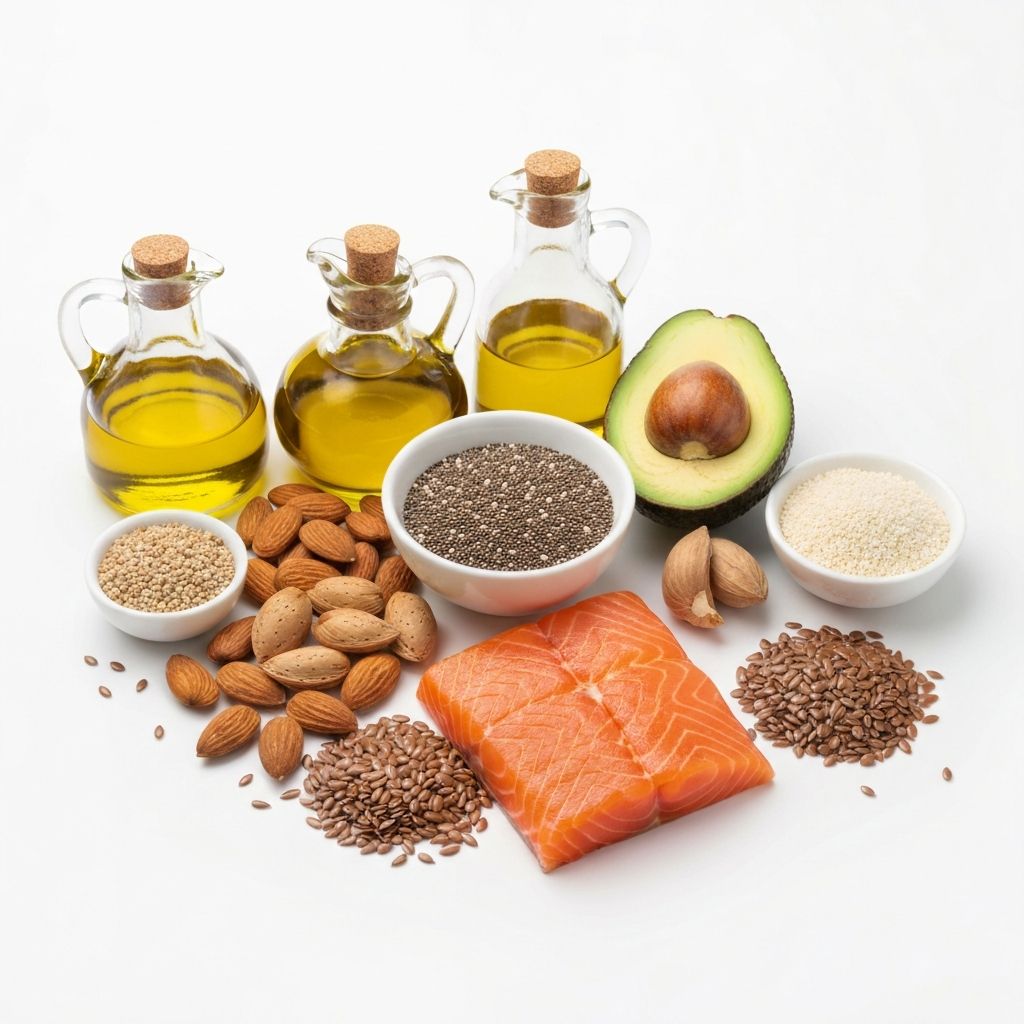
Fats are found in diverse foods:
- Oils and Fats: Olive oil, coconut oil, butter, lard
- Nuts and Seeds: Almonds, walnuts, sunflower seeds, sesame seeds
- Fish: Salmon, mackerel, sardines (rich in omega-3 fatty acids)
- Avocado: High in monounsaturated fat
- Meat and Dairy: Beef, pork, milk, cheese (contain primarily saturated fats)
- Whole Foods: Eggs, whole grains, legumes (contain small amounts)
Essential Fatty Acids
Two fatty acids cannot be synthesized by the body and must come from diet:
- Linoleic Acid (Omega-6): Found in vegetable oils, nuts, and seeds
- Alpha-Linolenic Acid (Omega-3): Found in flaxseeds, walnuts, and fatty fish
The body derives other omega-3 fatty acids (EPA and DHA) from these sources or from fish and seafood. These essential fatty acids support cardiovascular, neurological, and immune function.
Fat in Daily Nutrition
Dietary fat is essential for:
- Hormone production and regulation
- Absorption of fat-soluble vitamins (A, D, E, K)
- Brain and nervous system function
- Satiety and appetite regulation
- Inflammatory response management
- Long-term energy storage
Key Takeaways
- Dietary fat is essential and serves numerous critical functions
- Different types of fat exist: saturated, monounsaturated, polyunsaturated, and trans fats
- Fat provides energy and enables absorption of fat-soluble vitamins
- Essential fatty acids must come from diet and support health
- Individual fat needs and preferences vary; diverse sources exist